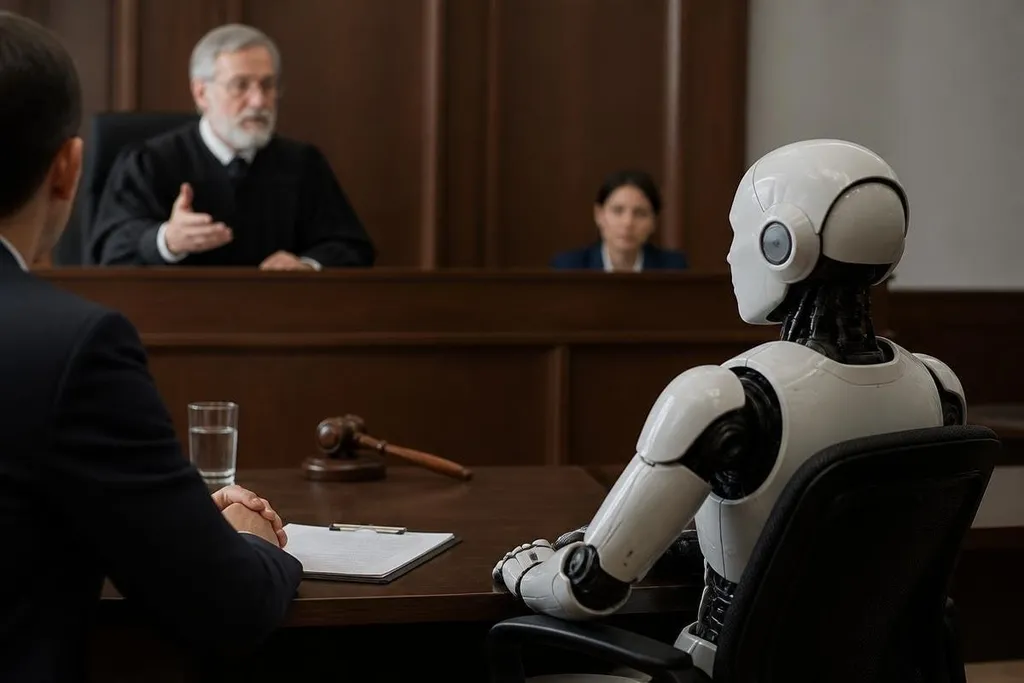
A robot can move, speak, make choices from software, and still have no clear claim to legal rights. The useful question is who should carry the duties when a robot causes harm, breaks property, or makes a decision that affects a person.
If you work with automation, this matters before a machine enters a warehouse, hospital, road, or home. The law needs a clear target for blame and payment, and a robot cannot meet that need on its own.
- Legal rights would give a robot protection or standing in court.
- Safety rules can protect people without treating machines as people.
- The owner, maker, or operator still needs a clear duty when something goes wrong.
Rights are more than protection
A legal right is a claim that the law will protect. A person may hold property, sign a contract, bring a case, or refuse unwanted treatment. A company can hold some of these rights too, even though it has no body.
That last point makes the debate harder. A legal person is a subject the law can treat as separate from the people behind it. Giving that status to a robot would change who can own its equipment, receive money, accept duties, or answer in court.
Current machines can follow rules without understanding them. A robot can avoid an obstacle because sensors and software direct its motors. That action may look like a choice, but the appearance alone gives no reason to treat the machine as a rights-holder.
The liability problem comes first
Suppose an autonomous mobile robot hits a worker after a sensor misses a person near a shelf. The useful legal questions are practical: Was the sensor suitable? Was the software changed? Did the operator ignore a warning? Did the owner skip a required check?
Giving the robot its own legal status would not answer those questions. A robot with no meaningful assets could become a place to assign blame without giving the injured person a way to recover money.
The stronger path is to assign duties across the system.
The maker may answer for a design fault. The site owner may answer for poor setup. The operator may answer for unsafe use. A contract or insurance policy can then set out who pays and how records are kept.
Questions about legal rights start with the machine’s real role: does it act on its own, or does a person set each important step? Dated robotics reporting at Robot24.com can tie that answer to a named robot, company, and test site before the next section asks what protection people may need instead.
What robots may need instead
Legal rights are a poor fit for current machines. Clear rules for people are more useful, especially when a robot acts without a direct command at that moment.
Those rules could require a named owner, a record of software changes, a way to stop the machine, and a review after an injury. They could also set limits for systems that make decisions about access, work, care, or movement.
Narrow legal protection may still help a robot. A court could protect the data it stores, the software it runs, or the property held by its owner.
That protection would serve people and organizations without claiming that the robot has feelings, needs, or a personal interest in staying active.
A practical test for new laws
Before giving any robot a legal right, lawmakers should ask:
- Name the interest: What exact thing would the right protect?
- Name the holder: Can the robot understand or use that right in a way the law can check?
- Name the duty: Which person or company must act when the right is broken?
- Name the remedy: What can a court order, and where would payment come from?
- Name the limit: Can the rule protect people if the robot acts outside its design?
If these answers point back to the maker, owner, or operator, the robot adds a legal label without solving the case.
I would not give current robots legal rights. I would give people clear duties around them, require records that show how an automated decision happened, and review that position if a machine can show a real interest that law can test.
For now, the useful legal question is narrower: who built, sold, controlled, or failed to stop the robot? Until a court has a better answer, that person or company should remain in view.